
Choosing a mannequin – advice for buyers
-

How to Choose a Full-Size Mannequin for a Clothing Store
A full-size mannequin helps customers see clothing not as an isolated item on a hanger, but as a complete look: the fit, length, proportions, combination of top and bottom, footwear and accessories. A well-chosen mannequin makes the shop window easier to understand, the sales floor neater and the product itself closer to a real purchase.
However, a mannequin is not always the right place to cut costs. A very cheap or poorly finished model can make a boutique look simpler: clothing appears less valuable, the display loses impact, and customers may feel that the arrangement is temporary or accidental. A good mannequin does not have to be luxurious, but it should look presentable, stand securely, hold the shape of the garments neatly and match the level of the store.
The Galsas range includes female, male and child full-size mannequins, XXL models for plus-size womenswear, exclusive fabric mannequins with adjustable wooden arms, as well as white, black, gold, silver and chrome finishes. This article therefore focuses not on abstract theory, but on a practical approach: how to choose a mannequin for a specific store, how to position it on the sales floor and what to check before buying.
Photo 1. A ready-made retail composition with full-size mannequins: the figures work together as a
complete display rather than as isolated products
1. Start by Defining the Mannequin's Job
Before buying, answer one simple question: where will the mannequin stand and what should it achieve? The same mannequin may work well in a shop window but feel too dominant in a small sales area. Conversely, a quiet matte model may be ideal for everyday display but too subtle for a festive window.
- For a shop window, choose models that read well from a distance and support the store's style.
- On the sales floor, stability, easy dressing and a look that does not compete with the clothing are most important.
- For e-commerce photography, matte models are usually better: they create fewer reflections and show the garment's shape more evenly.
- For children's clothing, use child mannequins, because adult proportions do not show the fit of children's jackets, dresses, schoolwear or sportswear correctly.
If the store sells several clothing categories, it is better to build a small system rather than look for one “universal” mannequin: for example, female, male and child mannequins in the same colour, plus one accent model for the window.
2. Female, Male, Child, Fabric or XXL: Match the Mannequin to Your Range
The most common mistake is to buy a beautiful mannequin and then try to use it for every product. In real retail, the better starting point is the range itself: which clothing you sell most often, which sizes matter to your customers and what kind of store image you want to create.
Female Full-Size Mannequins
Female models are suitable for dresses, jackets, coats, trousers, skirts, suits and outfits with accessories. Check the height, shoulder width, waist, hips and the garment size that fits the mannequin best. If clothing is stretched too tightly or hangs loosely, even a good product will look weaker.
XXL Mannequins for Plus-Size Womenswear
If the store serves a broad size range, clothing should not be shown only on a standard figure. An XXL mannequin presents dresses, tunics, coats, trousers and outfits for plus-size women more honestly. For customers, this is an important signal: the store does more than list sizes in a product description - it understands how garments should look on a different body shape.
Exclusive Fabric Mannequins with Adjustable Wooden Arms
Fabric mannequins with wooden arms look softer and warmer than classic plastic models. They suit boutiques, showrooms, designer clothing, bridal displays and interior-led presentations. Adjustable arms make the pose more natural and help show a handbag, jacket, sleeve, shoulder line or complete outfit without the rigid feel of a fixed figure.
Male Full-Size Mannequins
A male mannequin is useful for suits, shirts, jackets, jeans, sportswear and casual clothing. Shoulder width, height and the overall structure of the silhouette are especially important. A good male mannequin should support the shape of a blazer, coat or jacket without making the outfit look too narrow or accidental.
Child Full-Size Mannequins
Child mannequins show children's clothing realistically: sleeve length, proportions, shoulder width and overall fit. In a children's department, they attract not only parents but children as well; a complete outfit catches attention faster and helps shoppers imagine the full set.

Photo 2. Female, male, child, XXL and fabric mannequins with wooden arms: different formats for different clothing categories and store concepts
3. Which Mannequin Is Right for Your Store?
To make the choice easier, start not only with colour or material but with the actual retail scenario.
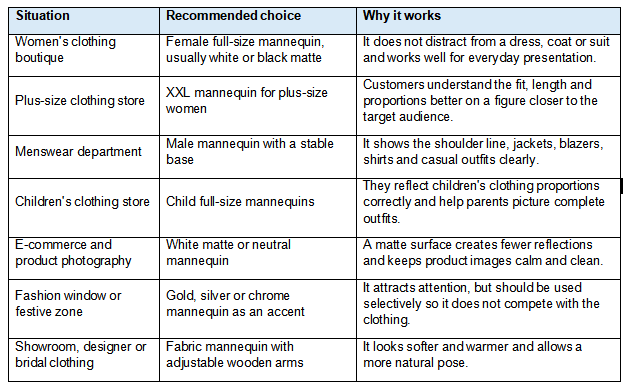
This approach helps you avoid paying for an effect you do not need - or buying a model that is too basic when the mannequin should support the store's image.
4. Colour and Finish: Base Models and Accents
The colour of a mannequin influences the entire display. There is no universal answer: the right choice depends on the interior, lighting, clothing and positioning of the store.
A white matte mannequin is a calm, versatile option. It works well for photography, minimalist windows and stores where the clothing should remain the main focus.
A white gloss mannequin is more noticeable and adds brightness to a window, but strong lighting may create reflections.
A black matte mannequin creates contrast and works well with light, bright or more premium clothing.
Gold, silver and chrome mannequins are best used as accents: for eveningwear, festive collections, fashion zones, accessories or a window that needs a stronger visual statement.
A calm “base + accent” combination often works well. For example, black matte mannequins can be paired with one gold or chrome figure. White mannequins combine neatly with gold or silver in a bright, clean interior. Avoid turning every mannequin into visual noise: the accent model should highlight the key product, not compete with it.
White matte and black matte mannequins are practical base options; gold or chrome works best as an accent
5. What to Check Before Buying a Full-Size Mannequin
Before ordering, check more than the appearance in the photo. Working details matter, especially when the mannequin will stand on the sales floor every day, be dressed frequently, moved around and reused for seasonal displays.
5.1. Size and Proportions
Check the height, shoulder width, waist, hips and suitable garment size. The mannequin should present the product neatly, without excessive stretching, twisting or sagging.
5.2. Material
For retail use, low weight, strength and easy maintenance matter. Plastic and fibreglass models are practical for regular displays, while fabric mannequins are usually chosen when a softer, more interior-focused presentation is important.
5.3. Surface Finish
A matte surface reflects less light and is better for photography. A gloss finish is more noticeable in a window. Gold, silver or chrome creates a decorative accent and works well where a stronger presentation is needed.
5.4. Base, Support and Footwear
A full-size mannequin feels like a complete look when it includes not only clothing but footwear. This is especially important for shop windows, evening outfits, suits, outerwear and seasonal displays. Before buying, check which base and support are included. Galsas.pl mannequins come with the necessary supports, making assembly easier and allowing the figure to be used immediately in a complete display.
5.5. Ease of Assembly and Dressing
If displays change often, the mannequin should be easy to disassemble and reassemble. This saves staff time and reduces the risk of damaging the arms, legs, head or fittings.
5.6. Stability and Safety
On a sales floor, customers, children and staff pass close to mannequins, while boxes, clothing racks and other equipment may be moved nearby. Stability is therefore not a minor detail but part of customer safety. A mannequin should not obstruct the aisle, make the area feel cramped or stand where it can easily be knocked.
5.7. Availability, Transparent Stock Levels and Delivery
Before buying, it is important to know not only the price but who is actually responsible for the product, stock and dispatch. Buying through marketplaces can provide the familiar additional protection of the platform, but this often comes at a cost: commissions and intermediary mark-ups may make the final price around 10-17% higher than buying from the direct supplier. Compare not only the price, but also stock availability, delivery time and the seller's reputation.
Galsas.lt focuses on transparent retail: for customer convenience, the website openly displays the stock quantity for every product. This shows immediately whether the chosen mannequin is available and makes it easier to plan the purchase without unpleasant surprises. We do not sell “air”: customers see real stock, understand the expected delivery time and can evaluate the seller in advance. Purchased mannequins qualify for free delivery and can be received within 2 business days after payment is received.
It is also worth checking the seller’s Google rating. Established and honest sellers that value customer trust do not hide their reviews and are comfortable linking to their profileClick on the link below to view reviews and ratings for Galsas on Google:
https://business.google.com/v/galsas/017945840068792098242/1a6c/_/rev/


6. How to Position Mannequins on the Sales Floor
Mannequins should not simply stand in a corner. Their job is to suggest a complete outfit, direct attention to the right area and help customers quickly find the products shown on the figure.
Shop Window
A group of 2-3 mannequins united by one theme works well in a shop window: season, new collection, business style, sportswear, schoolwear or a festive look. More figures are not always better. A calm composition, where each mannequin supports one part of the idea, often looks stronger.
Entrance Area
Near the entrance, show the product that matters most at the moment: a new collection, seasonal jacket, dress, suit, children’s set or promotional range. The key is not to block the entrance or make it difficult for customers to enter freely.
Centre of the Sales Floor
In the centre of the store, mannequins work well as an “island” of coordinated outfits. A clothing rack with the same garments, an accessory stand or a footwear shelf can be placed nearby. Customers then see more than an outfit - they immediately know where to find each item.
Some mannequins in the centre can be placed on a low platform. It does not need to be a high podium; a neat, low base is often enough. This visually separates the composition from customer traffic, makes it easier to notice and protects the mannequin from accidental contact. It improves customer safety and helps protect the mannequin itself, reducing the chance of it being knocked by a bag, trolley or shoulder in a narrow aisle.
The platform should be stable, non-slip and clearly visible in the space. Its purpose is not to create a barrier, but to signal gently that this is a completed display worth looking at, not something to brush against on every pass.
Mannequins on a low platform next to a rack with the same garments: the customer sees the outfit and immediately knows where to find the products.
Category Areas
A male mannequin belongs naturally in the menswear area, a female mannequin in womenswear and a child mannequin in the children’s department. This may seem obvious, but it makes the store easier to understand. Customers find the correct category faster and absorb complete outfit ideas more easily7. Simple Display Layouts
A small store can begin with a simple plan: one mannequin in the window, one near the entrance and one in the key sales area. Larger spaces can add grouped compositions.
- “Seasonal entrance”: one mannequin near the entrance presents the main seasonal product - a coat, jacket, suit, dress or school outfit.
- “Complete outfit”: the mannequin stands next to a clothing rack holding every item used in the look.
- “Family window”: female, male and child mannequins in the same colour present different store categories.
- “Photography and online sales”: a white matte mannequin is reserved for product photography and not used in the daily sales-floor display.
“Accent window”: a gold, silver or chrome mannequin is used not as the base but as the visual centre for a new collection, eveningwear or a festive theme.
8. What to Avoid
Even a good mannequin can look ineffective when used without a system. These mistakes most often weaken a shop window or sales floor:
- too many mannequins in a small area;
- different colours and styles without one clear idea;
- placing the mannequin far away from the product it is wearing;
- poorly steamed clothing or garments that do not fit the figure;
- forgetting footwear and accessories, leaving the outfit unfinished;
- blocking an aisle or positioning the mannequin where it can easily be knocked;
- using gold, silver or chrome accent figures everywhere, until they begin competing with the clothing.
The rule is simple: the mannequin should support the sale, not complicate the space. If it does not show an outfit, lead customers to the product or make the area easier to understand, move it.
9. Quick Questions Before Buying
- Which clothing category will be displayed: womenswear, menswear, childrenswear, XXL or a fabric interior model?
- Where will it stand: shop window, entrance, centre of the store, category area or photo zone?
- Which colour suits the store: white, black, gold, silver or chrome?
- Do you need a matte surface for photography or a more noticeable gloss effect for the window?
- Does the mannequin size match the clothing you sell most often?
- Are the base and supports included for a complete display with footwear?
- Is the mannequin easy to dress and move?
- Will it obstruct the aisle or customer flow?
- Is the model in stock, is the quantity visible online, and is the delivery time after payment suitable?
Conclusion
A full-size mannequin should be chosen as a working tool for the store. White or black matte models suit a calm base display. For a window, sale or fashion accent, choose a gold, silver or chrome mannequin. Use an XXL model for plus-size clothing, a child mannequin for the children’s department, and a fabric mannequin with adjustable wooden arms for a boutique or showroom that needs a warmer interior feel.
A good mannequin does more than hold clothes. It shows customers a ready-made solution: how the garment fits, what to combine it with and why it deserves attention. That is why the decision should consider not only the price, but also the look, stability, included components, stock availability and how well the mannequin suits your particular store.
At Galsas.pl, you can choose full-size mannequins for different retail tasks: shop windows, sales floors, photography, children’s departments, plus-size ranges and accent fashion displays. Visible stock levels, free delivery on purchased mannequins and delivery within 2 business days after payment make it easier to plan a display update with less uncertainty.


